 USD
USD
 EUR
EUR
 AUD
AUD
 GBP
GBP
 SGD
SGD

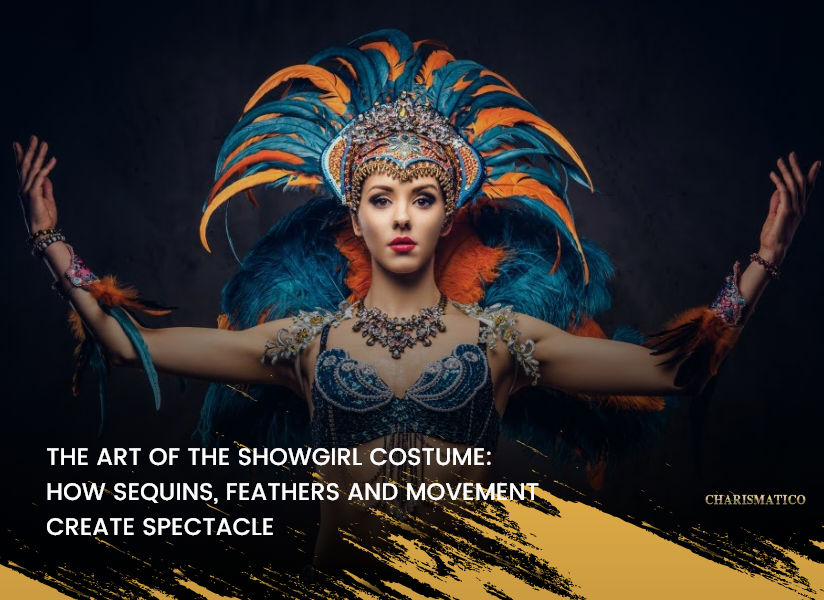
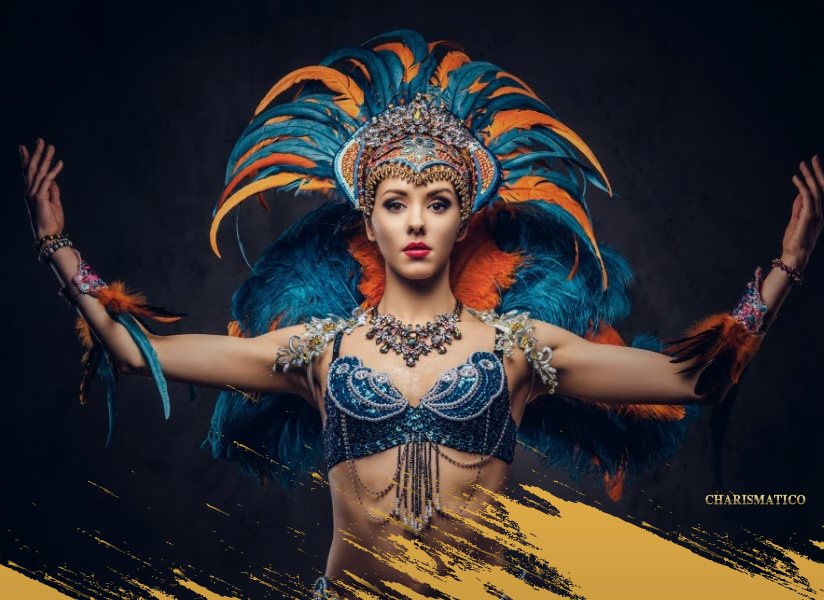
The Art of the Showgirl Costume: How Sequins, Feathers and Movement Create Spectacle
A showgirl costume has to be larger than life without getting in the performer’s way. That tension is what makes the design so interesting. Sequins, feathers, mirrors, fringe, and sculpted silhouettes can create unforgettable stage presence, but only when they work with movement, lighting, and the body rather than simply adding decoration.
For showgirls, cabaret artists, drag performers, and costume designers, spectacle is never just about sparkle. It is about how a costume catches the light, extends a gesture, frames a pose, and holds attention from the first entrance to the final bow. In this article, we explore how sequins, feathers, and movement come together to shape a powerful showgirl look, and what performers should consider when choosing or styling costumes for real stage conditions.
At a Glance
- A strong showgirl costume is designed for movement, not just decoration
- Sequins and feathers help shape visibility, rhythm, and stage presence
- Smart styling balances spectacle with comfort and performance control
- The article explains how to choose details that create stronger visual impact
Why The Best Showgirl Costumes Are Built Around Movement
A showgirl costume is never fully finished on the hanger. It only becomes complete once the performer starts moving.
That is why movement should come early in the design process, not as an afterthought. A costume may have beautiful sequins, dramatic feathers, and a strong silhouette, but if it feels stiff, pulls in the wrong places, or hides the body’s natural rhythm, it can weaken the performance instead of enhancing it.
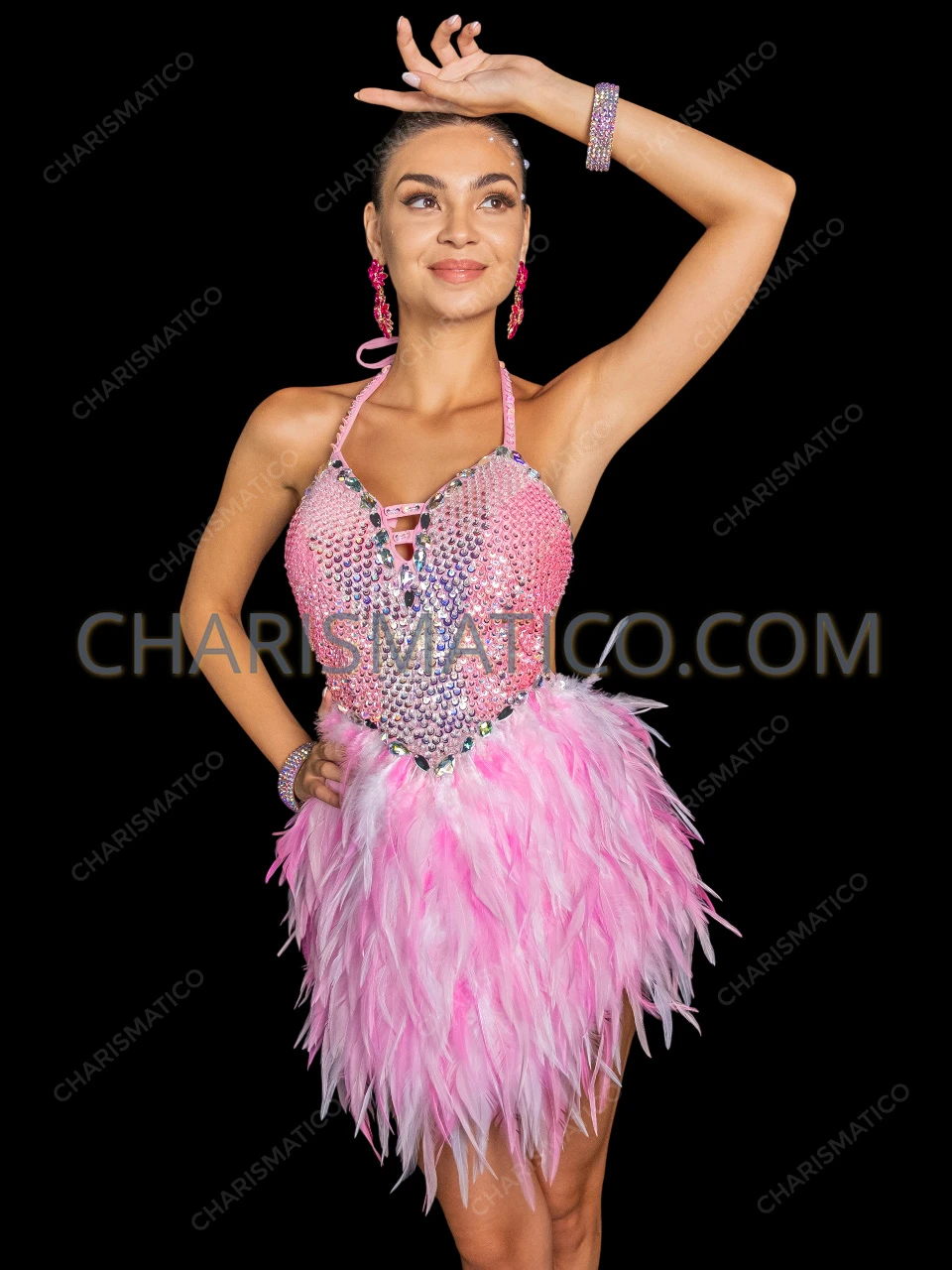
A well put together showgirl costume adds style and stage presence, such as our pink feather showgirl dress
Flamingo-Inspired Pink Feather Showgirl Dress
Why Static Beauty Does Not Always Translate On Stage
Costumes are often judged first by how they look in photos, but stage performance asks for more. Under bright lights and from a distance, fine details can disappear. What the audience reads most clearly is shape, shine, proportion, and motion.
A successful showgirl costume needs to:
- Create a clear silhouette from multiple viewing angles
- Respond well to walking, turning, posing, and dancing
- Keep its visual impact even when seen from the back row
- Support the performer’s timing rather than interrupt it
How Movement Creates Spectacle
Movement turns decoration into performance. Sequins catch light as the body shifts. Feathers extend the line of the arms, shoulders, hips, or headpiece. Fringe and layered trims add rhythm, making even a small gesture feel larger.
For a performer, that can change the entire energy of a routine. A slow walk feels more commanding. A spin gains drama. A pose lands with more authority because the costume continues the motion for a moment after the body stops.
What Performers Should Prioritize First
Before adding more embellishment, focus on the costume’s performance foundation:
- Mobility: Can you lift your arms, turn, bend, and walk comfortably?
- Balance: Is the weight evenly distributed, especially with feathers or headpieces?
- Visibility: Does the silhouette read clearly under stage lighting?
- Control: Does the costume move with you, or do you have to manage it constantly?
How Sequins Change The Way A Costume Performs Under Lighting
Sequins are often treated as decoration, but on stage they function more like lighting tools. Their job is to catch, scatter, and redirect light so the costume stays active even when the performer is holding still.
That matters because a showgirl costume needs visual rhythm. Shine should not look like one flat reflective surface. It should move across the body as the performer walks, turns, poses, or transitions between choreography.
Why Sequins Are More Than Decoration
The placement of sequins affects where the audience looks first. If they are concentrated around the torso, the eye stays centered. If they are used along the hips, sleeves, or neckline, they can emphasize movement and body lines.
Sequins work especially well when they support the choreography:
- Hip details enhance turns and side-to-side movement
- Shoulder and sleeve accents make arm lines more visible
- Bodice embellishment helps anchor the costume under strong lighting
- Scattered sequin patterns create shimmer without overwhelming the silhouette
Large Sequins Vs Small Sequins
|
Sequin Type |
Visual Effect |
Best Use Case |
Possible Challenge |
|
Large Sequins |
Bold flashes of light |
Big stages, high-energy numbers |
Can feel heavier or more reflective |
|
Small Sequins |
Fine shimmer and texture |
Cabaret, close-up shows, detailed looks |
May read less strongly from far away |
|
Mixed Sequins |
Layered shine and dimension |
Statement costumes and revue looks |
Needs balance to avoid visual clutter |
How To Avoid Overloading A Costume With Shine
Too much shine can flatten a costume instead of elevating it. If every surface reflects equally, the audience has nowhere to focus.
A stronger approach is contrast. Pair sequins with feathers, mesh, matte fabricNot all feathers behave the same way, so the choice should match the performance mood.
|
Feather Type |
Visual Effect |
Best Use Case |
|
Ostrich Feathers |
Soft, flowing, luxurious movement |
Classic showgirl looks, cabaret, slow reveals |
|
Coque Feathers |
Sharper texture and stronger definition |
Edgier stage looks, dramatic collars, shoulder pieces |
|
Marabou |
Fluffy, playful softness |
Burlesque styling, trims, cuffs, vintage-inspired looks |
, or structured panels so the sparkle has space to stand out. This creates depth and keeps the showgirl look polished rather than chaotic.
Why Feathers Remain A Signature Element In Showgirl Costume Design
Feathers bring a kind of softness that sequins cannot. Where sequins sharpen the light, feathers extend the body’s movement. They add height, width, texture, and a sense of air around the performer, which is why they remain so closely tied to classic showgirl costume design.
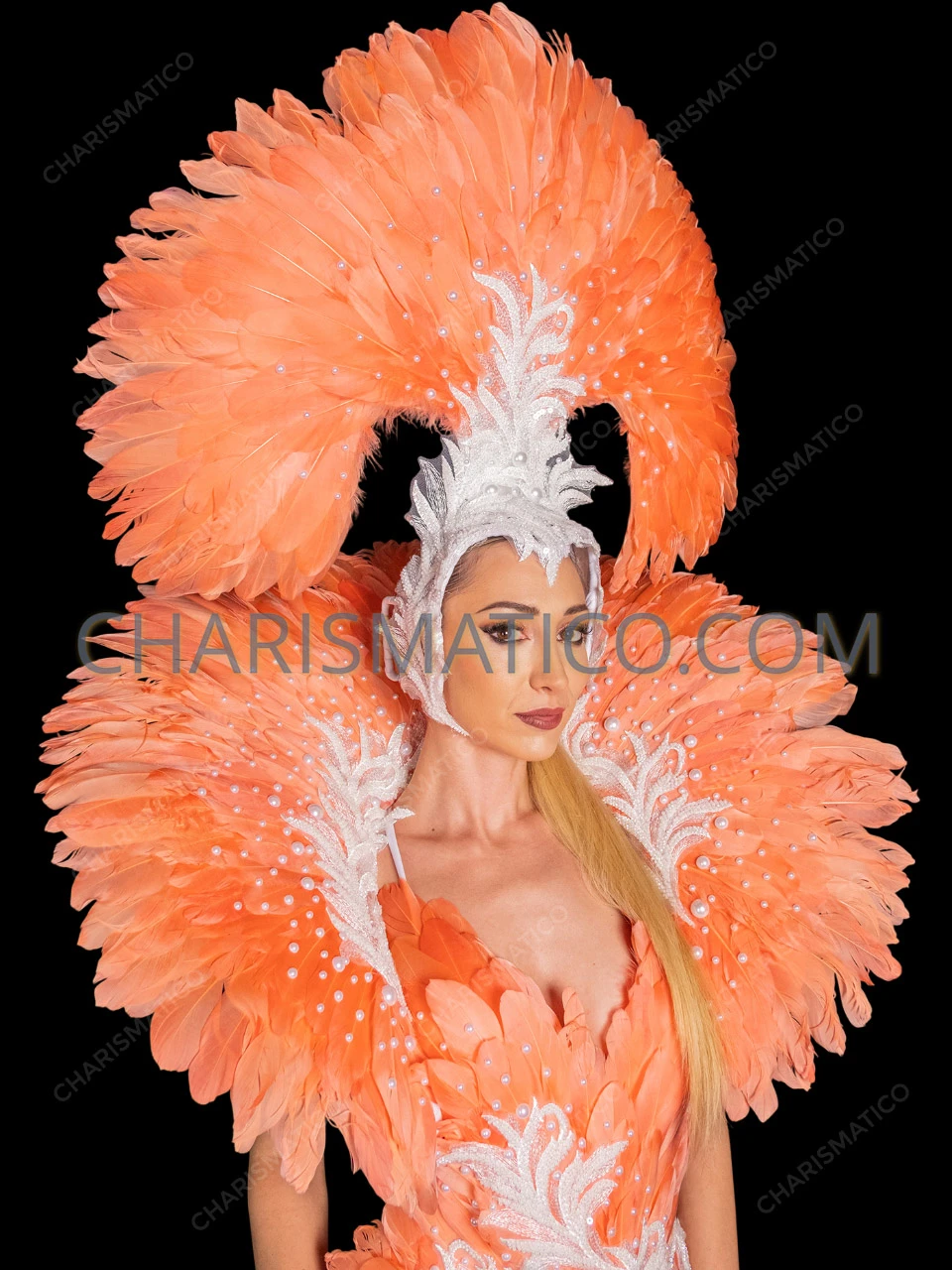
Feathers add a different dynamic to a costume, like this feather headdress set
Peach Fantasy Feather Showgirl Costume Headdress Set
What Feathers Add That Fabric Alone Cannot
Fabric can create shape, but feathers create atmosphere. A feathered shoulder, collar, skirt, or headpiece expands the performer’s outline without making the costume feel visually heavy.
This is especially useful on stage because feathers respond to small movements. A turn of the head, a lifted arm, or a slow walk can create motion before the choreography becomes large or obvious.
Feathers help with:
- Scale: They make the performer appear taller, wider, or more statuesque
- Motion: They continue moving after the body stops
- Softness: They balance harder elements like mirrors, sequins, and rhinestones
- Drama: They create instant entrance impact
Which Feather Styles Create Different Effects?
Where Sparkle Becomes Stagecraft
A memorable showgirl costume is never just a collection of beautiful details. Sequins, feathers, mirrors, fringe, and sculpted shapes all have a purpose: to help the performer hold attention, move with confidence, and create a visual moment that feels bigger than the stage itself.
At Charismatico, we see showgirl costume design as a balance between fantasy and function. A look should feel glamorous, but it also needs to support real movement, real timing, and real performance conditions. Whether the goal is classic cabaret elegance, drag-stage drama, or full revue-style impact, the best designs begin with one question: how will this costume come alive once the performer moves?
Notes From The Spotlight
- A strong showgirl costume should be designed for movement, lighting, and stage visibility, not just still photos
- Sequins work best when they guide the audience’s eye and support the rhythm of the performance
- Feathers add height, softness, and motion that fabric alone cannot create
- Strategic placement often creates more impact than excessive embellishment
- Comfort, balance, and mobility directly affect how confidently a performer moves
- The most memorable stage looks combine spectacle, control, and a clear visual focal point