 USD
USD
 EUR
EUR
 AUD
AUD
 GBP
GBP
 SGD
SGD

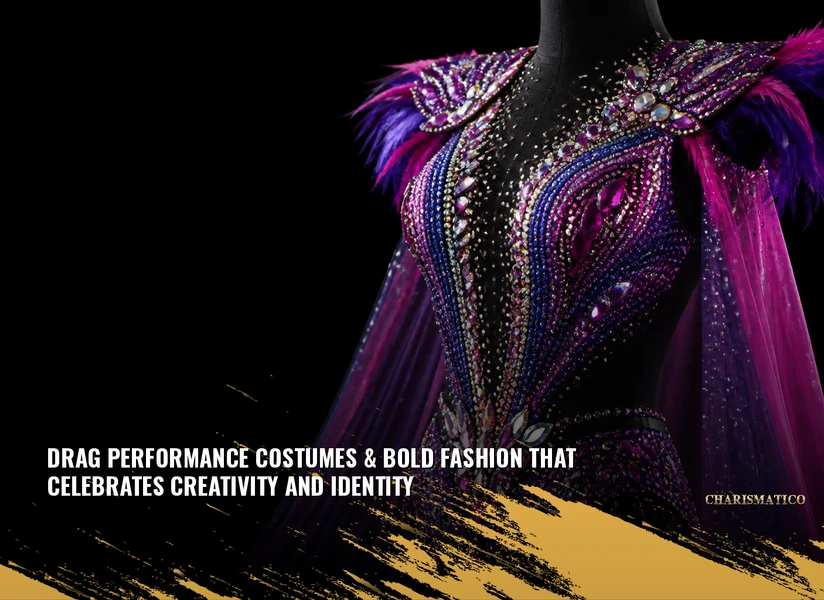
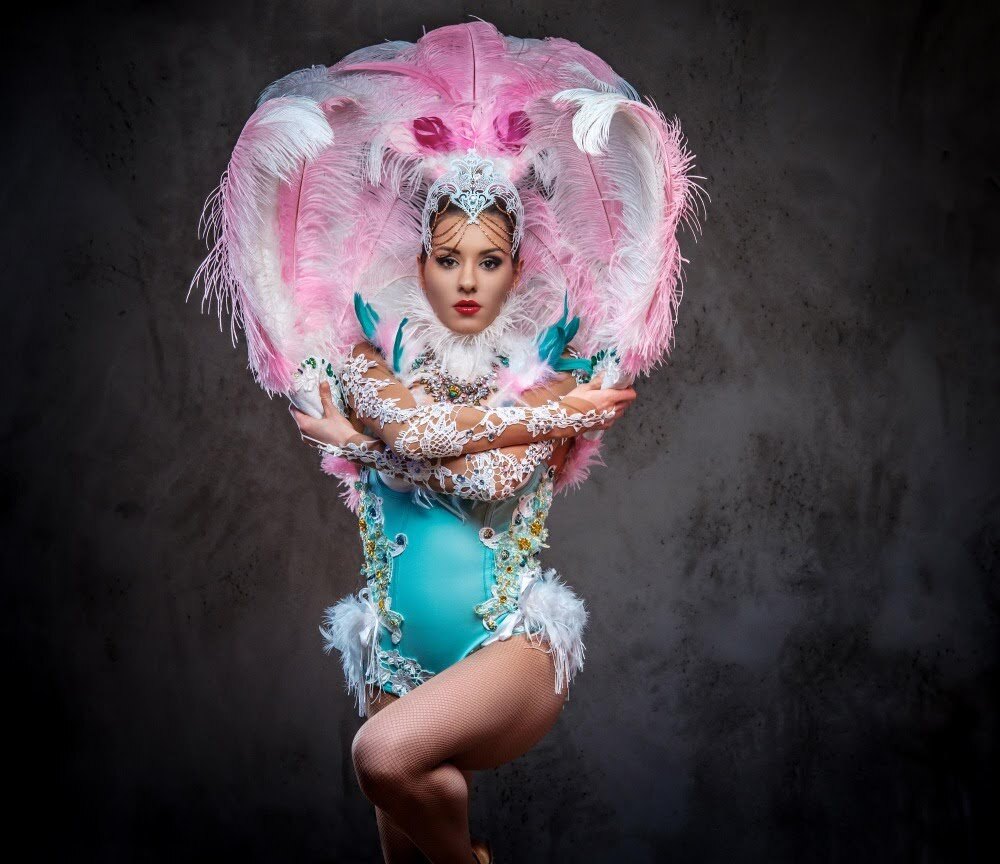
Drag Performance Costumes & Bold Fashion That Celebrates Creativity and Identity
A drag costume is character design carried out in fabric. Exaggerated shape, fabric weight, and where the sparkle is placed are the three levers that turn a garment into a stage identity an audience remembers, and the best drag costumes make those decisions deliberately rather than by piling on more of everything.
For drag queens, drag kings, club performers, pageant competitors, and the designers who dress them, the question is never how much a look sparkles. It is what the look says about who is wearing it, and whether that message survives a full number under hot lights.
At a Glance
- Silhouette does the identity work before any detail becomes visible
- Fabric behavior decides whether a look reads from the back row or dies at row five
- Placed embellishment directs the eye to the performer's strongest moment
- The strongest drag looks are repeatable signatures, not one-off spectacles
Why A Drag Costume Is Character Design, Not Just Clothing
A drag costume exists to make a persona legible in seconds. The audience meets the character before the first word or beat lands, and what they read in that moment is shape, color, and scale, all of which the costume controls entirely.
The clearest evidence of this sits in the difference between two pieces from the same category. A red vinyl spike-shoulder drag queen jacket and a black organza drag queen ruffle coat are both outerwear, both built for stage, both designed to make an entrance. One reads as hard, confrontational, and futuristic. The other reads as soft, theatrical, and grand. The garment type is identical. The character is not, and the costume is doing all of that work before the performer moves.
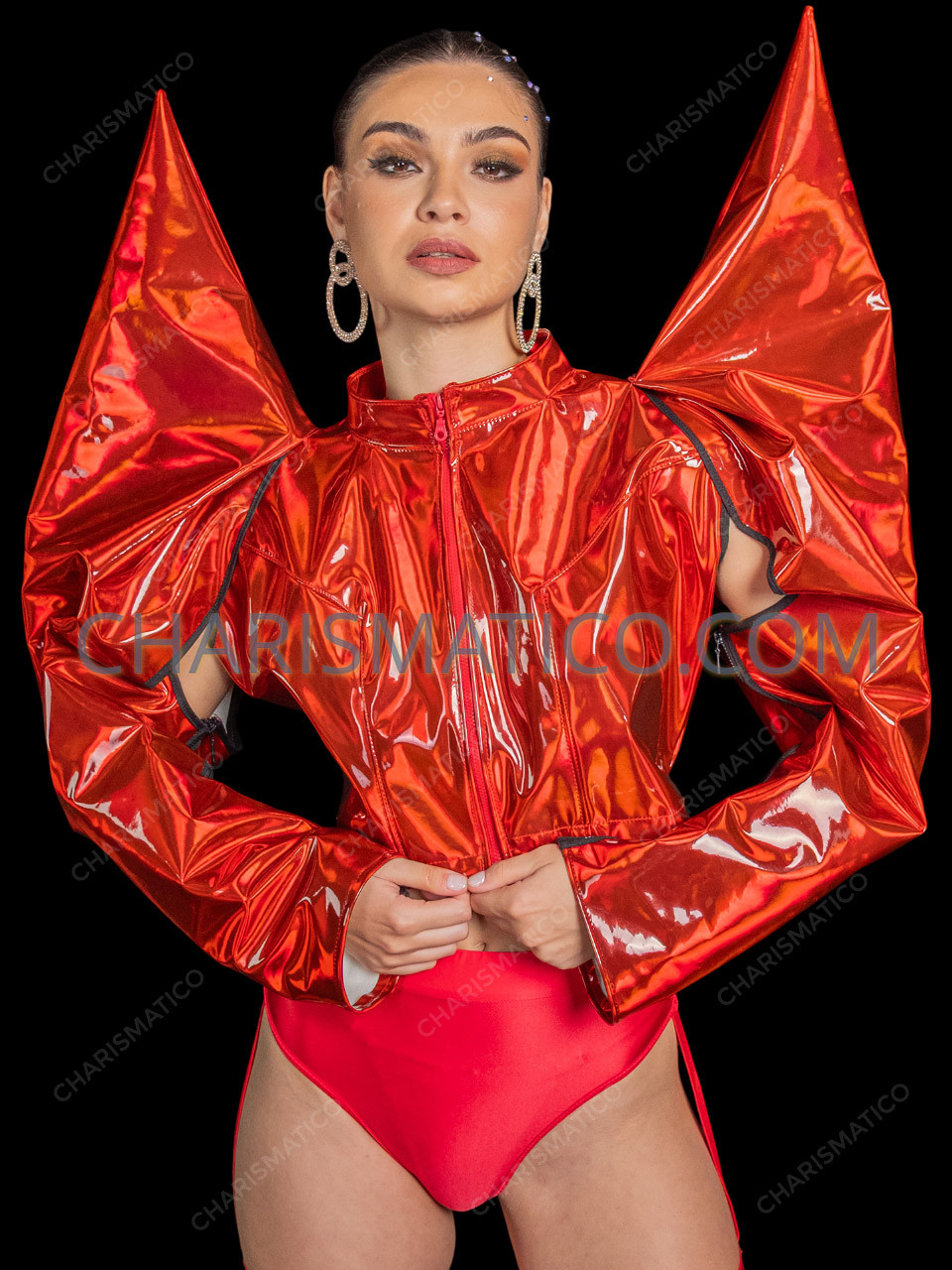
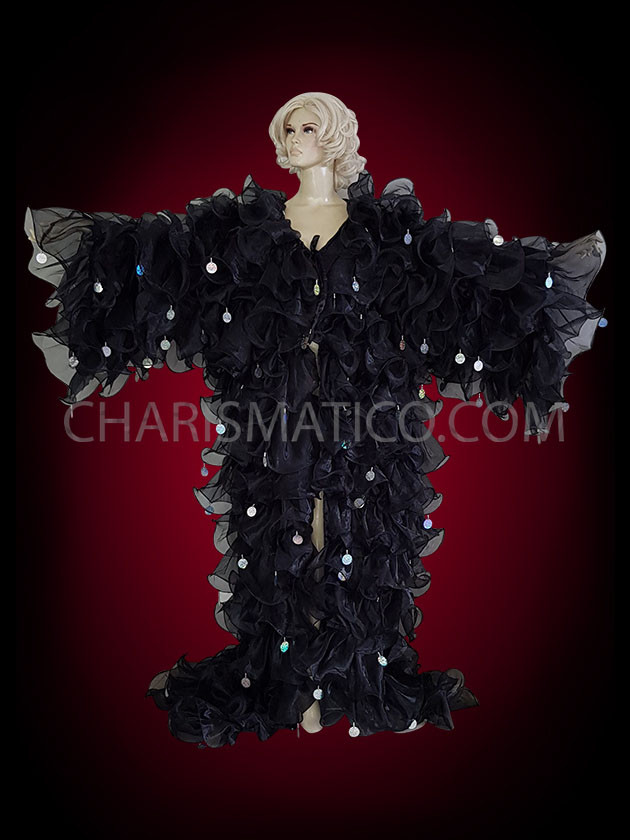
Same garment category, opposite characters. The vinyl reads hard and futuristic, the organza soft and theatrical, before either performer moves.
Red vinyl spike-shoulder drag jacket next to a black organza ruffled drag coat
A signature is what happens when those choices repeat. Performers who become instantly recognizable tend to return to the same small set of visual decisions across looks, whether that is a proportion, a recurring silhouette, or a color they own. Recognition is built through consistency rather than escalation, which is also why chasing a bigger look every show rarely produces a stronger identity. It produces a series of unconnected costumes.
That is the reasoning behind how the drag queen costume collection is organized, with pieces grouped by the kind of stage presence they create rather than simply by garment type. It is also why the made-to-measure route exists. When a performer commissions through the custom design service, the conversation starts with proportion and character before it reaches fabric swatches, because a costume built to someone else's measurements will always fight the body it is on.
What Makes A Look Recognizable From The Back Row
Distance strips detail away. What survives is limited, and it is worth knowing which four things actually make the trip:
- Shape: the outline of the body, read as a single form
- Proportion: how the head, shoulders, waist, and hem relate to each other
- Color block: large areas of contrast, not fine patterning
- Motion: what continues moving after the performer stops
How Exaggerated Silhouettes Shape A Stage Persona
Silhouette is the first thing an audience reads and the last thing they forget. Before texture, before embellishment, before any detail resolves, the eye takes in a single outline against the light. Exaggeration in drag costume design is not decoration for its own sake. It is the deliberate distortion of that outline until it says something specific.
Shoulders and collars create authority. Widening the top of the body and raising the line past the head produces scale that reads as power, which is why statement collars recur across avant-garde and villain-coded looks. A piece like the silver snow drag queen ruffle organza coat with a dramatic high collar works because the collar frames the face while enlarging the whole figure, so attention lands on the performer's expression and their presence at the same time.
Corsetry and padding create the hourglass that pageant and classic glamour drag is built on. The waist is the reference point. Everything above and below it reads in relation to how sharply it is cinched, which is why corsets sit underneath so many looks that appear to be about the outer garment.
Volume through the hip and hem produces stature and occasion. Full skirts and structured drag queen gowns command floor space and give a slow walk weight, which is why they dominate pageant categories and finale numbers.
Sharp verticals do the opposite work, and they are how most drag king outfits achieve their effect. Squared shoulders, a straight line through the torso, and a strong vertical break flatten the curve rather than exaggerating it. Tailored pieces, vests, and structured jackets narrow the figure into something angular and controlled. The exaggeration is still there. It is simply pushed in the other direction, and the same drag queen style principles apply: pick the distortion, then commit to it.
Where Exaggeration Starts To Work Against The Performer
A collar that frames the face beautifully in a standing pose can block peripheral vision during a turn. Shoulder structure that reads as commanding from the audience can catch on a doorframe in a narrow wing space. Hip volume that fills a proscenium stage becomes a liability in a crowded bar with two feet of performance area. None of these are design flaws. They are the trade-offs of the shape working correctly.
The variables worth checking before committing to a look:
- Sightlines: can you see the floor, the wings, and your marks
- Reach: can you lift both arms fully without the structure resisting
- Clearance: how far does the costume extend past your body, and does the venue allow for it
- Change access: can you get out of it and into the next look in the time the set allows
- Distribution: is the weight carried on the shoulders, the hips, or fighting between the two
Structured pieces built to a generic size chart tend to sit wrong at exactly the points that matter, pulling at the shoulder or riding at the waist, which is why the measurement guide covers more points than a standard clothing size requires. A dramatic silhouette only reads as intentional if the body underneath it is not compensating.
How Fabric Choice Changes The Way A Costume Reads
Organza and tulle build volume without weight, holding a dramatic shape through a full set. Vinyl and metallics give hard, directional reflection that suits sharp silhouettes and edgier characters. Satin and velvet photograph rich but absorb stage light, so they need contrast or structure alongside them. Illusion mesh controls how much skin reads at distance, letting a look sit somewhere between covered and bare depending on where the audience is sitting.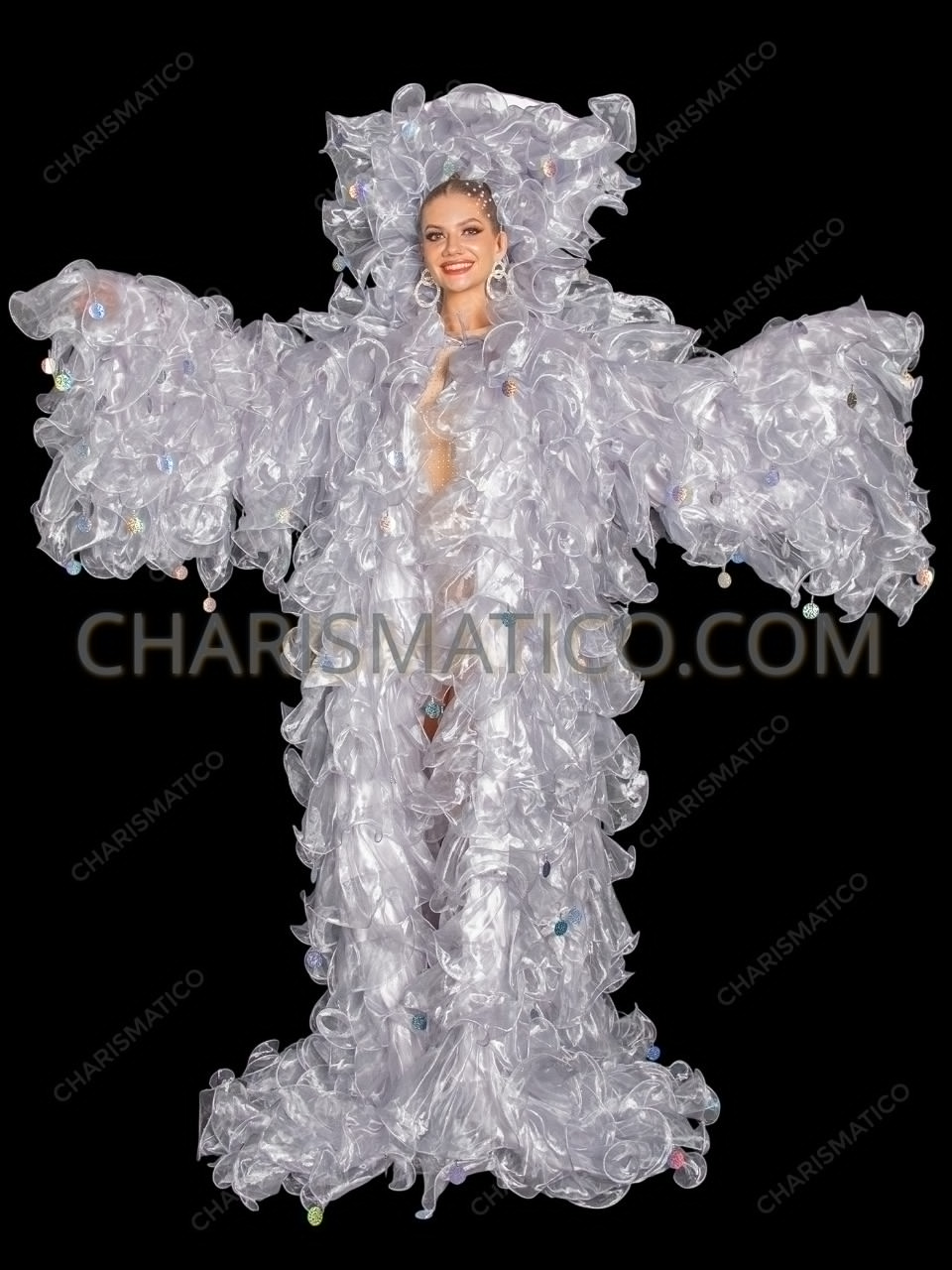
Organza holds a dramatic shape across a full set without adding the weight that costs a performer stamina.
Ruffled organza drag coat showing volume held away from the body
The trade-off is stamina. Heavy fabric holds an impressive shape and costs the performer energy across every number after the first, which is part of why so much stage-focused drag attire is built in organza rather than heavier alternatives.
Fabric also determines how embellishment behaves, since the same sequin reads differently on a stiff panel than on something that flows. Our piece on how sequins and feathers create spectacle covers that relationship in detail.
Where Sparkle And Accessories Do The Most Work
Crowns and headpieces add height and read as status instantly. Statement sleeves and cuffs extend the arm line so gestures stay legible from distance. Boas and capes create reveal moments and give a number its structure. Wigs anchor the whole silhouette, which is why a wig that fights the proportion of the costume undermines both.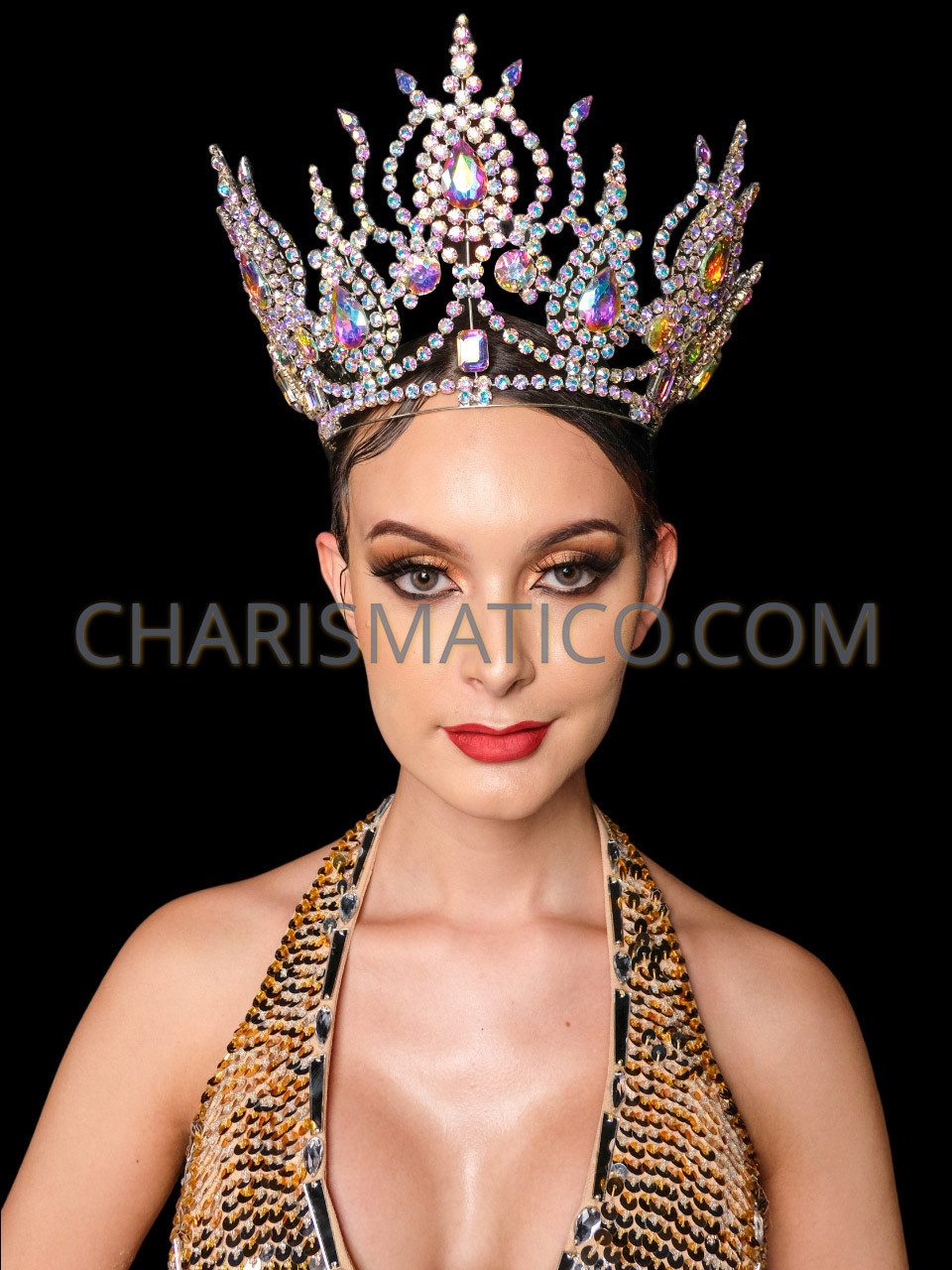
When the crown is the focal point, everything below it should support the moment rather than compete for it.
Crystallized crown headpiece worn as the focal point of a drag look
The rule that matters: one focal point per look. Competing focal points flatten a costume rather than building it, and this is the most common reason an expensive look underperforms a simpler one. If the crown is the moment, the bodice should support it rather than compete with it.
Costume As Self-Portrait
Drag costume design is a performer deciding, in fabric, who they are on stage. The craft question and the identity question turn out to be the same question, which is why the strongest looks feel inevitable rather than assembled.
Start from the character, choose the silhouette that carries it, pick fabric for how the number moves, place one focal point, then test it against the actual venue. At Charismatico, we believe that sequence is where every made-to-measure commission begins.